

Request Sent Successfully!
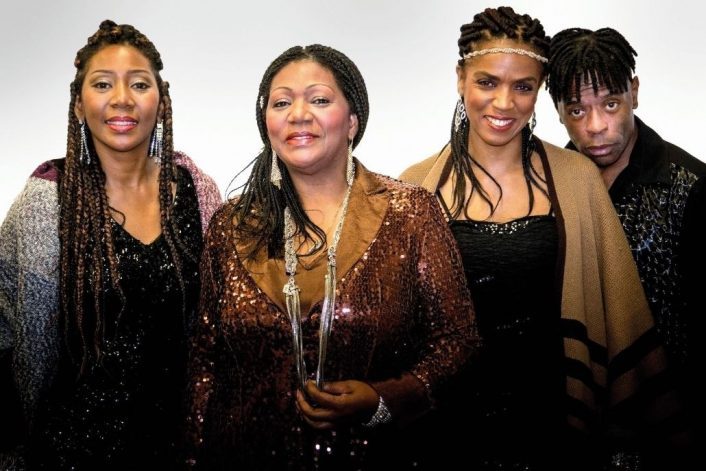
Thank you for your interest in Boney M.
We will be delighted to perform for you.
You got email, check your inbox !!! spam folder too !!!
Looking forward to hearing from you soon
Maya +447869422699
“Rivers of Babylon” is one of Boney M.’s most successful recordings, released in 1978 and featuring the distinctive lead vocals of Liz Mitchell. Produced by Frank Farian, the song combines a memorable melody, layered vocal harmonies and a disco-pop arrangement with lyrics inspired by the Bible.
Originally recorded by the Jamaican reggae group The Melodians in 1970, “Rivers of Babylon” draws on Psalms 137 and 19, expressing themes of exile, remembrance and faith.
Boney M.’s version became an international hit. Released with “Brown Girl in the Ring”, it spent five weeks at No. 1 on the UK Singles Chart and appeared on the group’s successful third studio album, Nightflight to Venus.
| Detail | Information |
|---|---|
| Song | Rivers of Babylon |
| Artist | Boney M. |
| Boney M. release year | 1978 |
| Album | Nightflight to Venus |
| Original recording | The Melodians (1970) |
| Original songwriters | Brent Dowe and Trevor McNaughton |
| Additional composers credited on Boney M.’s version | Frank Farian and George Reyam |
| Producer | Frank Farian |
| Lead vocals | Liz Mitchell |
| Other credited studio vocalists | Marcia Barrett and Frank Farian |
| Genre | Disco, Eurodisco, reggae-influenced pop |
| UK Singles Chart | No. 1 — five weeks |
| Paired single | Rivers of Babylon / Brown Girl in the Ring |
| Biblical sources | Psalm 137:1–4 and Psalm 19:14 |
The song has an unusual history, connecting biblical poetry, Jamaican reggae and the international disco success of the late 1970s.
The central meaning of “Rivers of Babylon” comes from Psalm 137, which describes the sorrow of people living in exile after the Babylonian conquest of Jerusalem.
The psalm recalls the experience of captives remembering Zion, their homeland and spiritual centre, while living far from Jerusalem.
Its opening verses describe grief, displacement and the difficulty of singing sacred songs in a foreign land.
In this context, Babylon represents the place of exile, while Zion represents Jerusalem and the homeland the captives long to remember.
The song transforms these ancient words into a musical expression of memory, separation and the importance of preserving faith during difficult times.
Another important part of the lyrics comes from Psalm 19:14.
While Psalm 137 expresses sorrow and longing, Psalm 19 introduces a personal prayer about the sincerity of one’s words and thoughts before God.
Together, these passages connect the experience of exile with a continuing sense of spiritual devotion.
This combination gives “Rivers of Babylon” a meaning that extends beyond its memorable chorus.
The song is not simply about a geographical location. It is about people remembering where they belong and holding on to their beliefs even when separated from home.
The original reggae version also reflects the spiritual language of the Rastafari movement in Jamaica.
Within Rastafarian thought, Babylon can represent oppressive social and political systems, while Zion is associated with spiritual freedom and the African homeland, particularly Ethiopia.
The Melodians’ interpretation connected the ancient biblical account of displacement with themes that resonated in Jamaican culture.
Boney M.’s later version retained the song’s biblical foundation while presenting it through a different musical style.
Understanding these two contexts helps explain why “Rivers of Babylon” has a deeper history than a conventional disco hit.
“Rivers of Babylon” was originally recorded by The Melodians, a Jamaican reggae vocal group, in 1970.
The song was written by group members Brent Dowe and Trevor McNaughton, who adapted biblical passages into a reggae recording.
Their version combined vocal harmonies with the rhythmic and spiritual influences of Jamaican popular music.
The recording became an important example of how biblical language and Rastafarian ideas could be expressed through reggae.
Unlike Boney M.’s later interpretation, the original recording belongs firmly to the Jamaican reggae tradition.
The Melodians’ recording gained wider international exposure through the soundtrack of the Jamaican film The Harder They Come (1972), starring Jimmy Cliff.
The soundtrack brought together important Jamaican recordings and helped introduce reggae music to listeners beyond the Caribbean.
“Rivers of Babylon” appeared alongside recordings by Jimmy Cliff, Desmond Dekker and Toots and the Maytals.
The soundtrack’s importance was later recognised by the Library of Congress, which selected The Harder They Come for the United States National Recording Registry.
By 1978, Boney M. had already established an international reputation through songs such as “Daddy Cool”, “Sunny”, “Ma Baker” and “Belfast”.
Producer Frank Farian brought “Rivers of Babylon” into the group’s repertoire, developing a new studio recording for the international pop and disco market.
The Boney M. interpretation retained the recognisable melody and spiritual character of the earlier song while introducing a polished arrangement with a stronger dance-oriented rhythm.
Layered harmonies and contrasting vocal parts became essential features of the recording.
Farian’s production helped create a version that could appeal to disco audiences without losing the emotional themes of the original composition.
Liz Mitchell’s lead vocal performance is one of the defining qualities of Boney M.’s “Rivers of Babylon”.
Her expressive voice brings warmth and clarity to the melody, communicating the song’s emotional content within its rhythmic arrangement.
The original studio recording also includes vocal contributions from Marcia Barrett and Frank Farian.
Mitchell, who joined Boney M. in 1976, became one of the most recognisable voices of the group’s classic period.
Her contribution to “Rivers of Babylon” is particularly important because the song requires both melodic precision and emotional expression.
The recording demonstrates how her voice could connect music rooted in spiritual traditions with the broader sound of international pop.
The original “Rivers of Babylon” was written by Brent Dowe and Trevor McNaughton of The Melodians.
The Boney M. version also carries additional composition credits for Frank Farian and George Reyam, alongside Dowe and McNaughton.
These credits are documented in the original Boney M. album catalogue.
It is important to distinguish between the Jamaican composition and the later Boney M. adaptation.
Although Farian produced Boney M.’s internationally successful recording, he did not originate the song’s biblical concept or the earlier Melodians recording.
The song’s development is therefore best understood through two major stages: its Jamaican reggae origin and its subsequent European disco interpretation.
“Rivers of Babylon” became one of Boney M.’s greatest commercial successes.
According to the Official Charts Company, the single entered the UK Singles Chart on 29 April 1978.
It reached No. 1 on 13 May 1978 and remained at the top for five consecutive weeks.
The combined “Rivers of Babylon / Brown Girl in the Ring” release spent 40 weeks on the UK Singles Chart.
In a retrospective published in 2022, Official Charts reported approximately 2.04 million UK sales, placing it among the biggest-selling British singles of the 1970s.
“Brown Girl in the Ring” appeared on the reverse side of the original “Rivers of Babylon” single.
Based on a traditional Caribbean children’s song, it developed substantial popularity in its own right.
The two recordings offered contrasting musical experiences: “Rivers of Babylon” carried a reflective, spiritual message, while “Brown Girl in the Ring” was lighter and more playful.
Their combined popularity made the release an important part of Boney M.’s extraordinary success in 1978.
When discussing its UK chart history, the distinction matters: the Official Charts Company lists both titles together.
“Rivers of Babylon” appeared on Nightflight to Venus, Boney M.’s third studio album, released in 1978.
The album also featured major recordings including “Rasputin”, “Brown Girl in the Ring” and “Painter Man”.
Nightflight to Venus became a major commercial success and reached No. 1 on the UK Official Albums Chart, spending four weeks at the top.
The album demonstrated the range of Boney M.’s musical identity, combining disco rhythms, dramatic storytelling, melodic pop and Caribbean influences.
“Rivers of Babylon” was one of its most important recordings, contributing to the group’s wider international success.
Boney M.’s television appearances played an important role in presenting the group’s music to international audiences.
One notable historical performance of “Rivers of Babylon” was broadcast on the German television programme ZDF Disco on 12 June 1978.
Watch Boney M. — Rivers of Babylon (ZDF Disco, 12 June 1978) on the official Boney M. YouTube channel.
The performance captures the group’s classic visual presentation and the popularity of the song during its original chart success.
You can also listen to the original 1978 studio recording using the Spotify player on this page.
“Rivers of Babylon” occupies a distinctive place in Boney M.’s musical history.
Few recordings in the group’s catalogue connect such different cultural and musical traditions: ancient biblical poetry, Jamaican Rastafarian reggae and the polished European disco sound of the 1970s.
The song also highlights Liz Mitchell’s contribution as a lead vocalist. Her performance helped give Boney M.’s version its recognisable melodic character.
Its exceptional chart success introduced this spiritually inspired composition to a vast international audience.
Decades after its original release, “Rivers of Babylon” remains one of the defining recordings of Boney M.’s classic era and an example of how music can connect different traditions and generations.
Boney M. released “Rivers of Babylon” in 1978. It appeared on the group’s third studio album, Nightflight to Venus, and was issued as a single with “Brown Girl in the Ring”.
The song was originally recorded by the Jamaican reggae group The Melodians in 1970. Boney M. released its internationally successful version in 1978.
Liz Mitchell performed the principal lead vocals. Marcia Barrett and Frank Farian also contributed to the studio recording.
The song primarily draws on Psalm 137:1–4, describing exile and remembrance of Zion. It also incorporates language from Psalm 19:14.
In the biblical context, Babylon is the place of exile, while Zion represents Jerusalem and the homeland remembered by the captives. In Rastafarian interpretation, these ideas also carry broader meanings associated with oppression, spiritual identity and freedom.
Yes. Boney M.’s “Rivers of Babylon / Brown Girl in the Ring” reached No. 1 in the United Kingdom in May 1978 and remained there for five weeks.
The song appears on Nightflight to Venus (1978), which also includes “Rasputin” and “Brown Girl in the Ring”.

Boney M Liz Mitchell contact:
Official website: boneym-lizmitchell.com
Email: info@boneym-lizmitchell.com
Phone: +447869422699
WhatsApp: +447869422699
Official Liz Mitchell Instagram: @boneym_liz_mitchell
The group’s manager is Thomas P.
Boney M Liz Mitchell’s booking agent and tour manager is Maya F.
Hiring Boney M Liz Mitchell for Corporate Events, Private Parties, Festivals and Weddings is easy with worldwide Booking Agent Maya of Boney M with Liz Mitchell.
