

Request Sent Successfully!
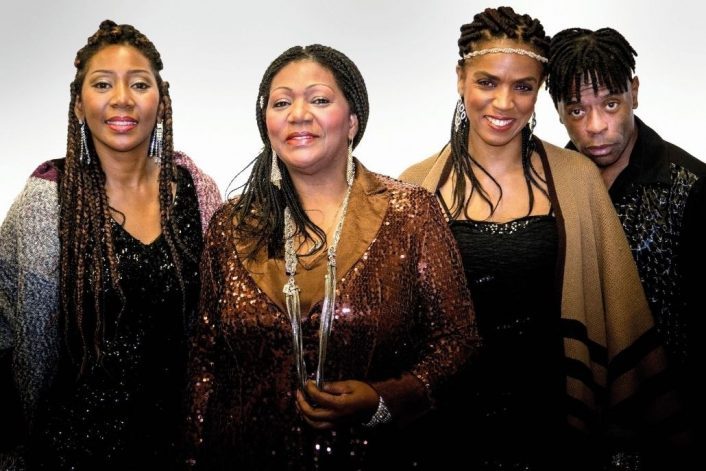
Thank you for your interest in Boney M.
We will be delighted to perform for you.
You got email, check your inbox !!! spam folder too !!!
Looking forward to hearing from you soon
Maya +447869422699
“Rasputin” is a 1978 disco hit by Boney M., inspired by the extraordinary life and controversial reputation of Grigori Rasputin, a Russian religious figure associated with the last imperial family. Released on the group’s third studio album, Nightflight to Venus, the song combines an energetic disco rhythm with dramatic storytelling and an instantly recognisable chorus.
Written by Frank Farian, Fred Jay and George Reyam, and produced by Farian, “Rasputin” became a major international hit. It reached No. 1 in West Germany and No. 2 on the UK Singles Chart.
Featuring the characteristic Boney M. studio vocals of Frank Farian, Liz Mitchell and Marcia Barrett, the recording remains one of the group’s most recognisable songs. Its popularity experienced another revival in 2021 through TikTok dance videos and a successful remix by Majestic.
| Detail | Information |
|---|---|
| Song | Rasputin |
| Artist | Boney M. |
| Release year | 1978 |
| Album | Nightflight to Venus |
| Songwriters | Frank Farian, Fred Jay, George Reyam |
| Producer | Frank Farian |
| Studio vocalists | Frank Farian, Liz Mitchell, Marcia Barrett |
| Genre | Disco, Eurodisco |
| Historical subject | Grigori Rasputin |
| UK Singles Chart | No. 2 |
| German Singles Chart | No. 1 |
| Official 2021 remix | Majestic & Boney M. — Rasputin |
“Rasputin” belongs to Boney M.’s classic recording period, alongside major international hits such as “Rivers of Babylon”, “Brown Girl in the Ring” and “Daddy Cool”.
“Rasputin” tells a dramatic and humorous story about Grigori Rasputin, a mysterious and controversial figure who gained influence within the Russian imperial court during the early twentieth century.
The lyrics portray him as a charismatic religious adviser whose reputation, relationships and supposed political power made him both admired and feared.
The story introduces Rasputin’s unusual position within Russian high society, describes his relationship with the imperial family and ends with a sensational account of his assassination.
The song combines real historical figures with popular legends, exaggerated character descriptions and fictionalised dialogue.
Its entertaining narrative is based on Rasputin’s reputation rather than a strictly accurate historical biography.
One of the central themes of the lyrics is Rasputin’s reputation as a womaniser.
During his lifetime, rumours about his personal relationships circulated widely in Russian society. His closeness to Empress Alexandra also encouraged speculation about an intimate relationship between them.
However, historians have not established credible evidence that Rasputin and the empress were lovers.
The song transforms these rumours into a memorable and deliberately exaggerated character portrait.
Understanding that distinction is important: Boney M.’s “Rasputin” is a disco song inspired by history, not a documentary account of Russian imperial life.
Grigori Rasputin was a Russian religious figure who became associated with Emperor Nicholas II and Empress Alexandra during the final years of imperial Russia.
Born in Siberia in 1869, he developed a reputation for religious devotion and spiritual guidance.
Although he was popularly described as a monk, Rasputin was not formally ordained as one.
His relationship with the imperial family became particularly important because their son, Alexei, suffered from haemophilia, a serious inherited bleeding disorder.
Empress Alexandra believed Rasputin’s prayers and spiritual support could help her son.
This trust gave Rasputin unusual access to the imperial family, and his influence became a source of controversy in Russian political society.
No. Rasputin did not formally govern Russia.
Nevertheless, his influence over Alexandra and his access to the imperial family caused concern among politicians, aristocrats and members of the public.
His reputation became increasingly controversial during the First World War, when the Russian monarchy faced growing political and social pressure.
Rumours surrounding his behaviour and influence contributed to public distrust of the imperial court.
Boney M.’s lyrics exaggerate this influence to create a dramatic musical character.
Grigori Rasputin was murdered in December 1916 in Petrograd, now known as Saint Petersburg.
A group of aristocrats, including Prince Felix Yusupov, became involved in a conspiracy to kill him.
They believed Rasputin’s influence was damaging the Russian monarchy.
His death became one of the most widely discussed events of the final years of imperial Russia.
The famous story of Rasputin surviving poison before being shot became an important part of his legend.
This dramatic version of his death also appears in Boney M.’s song.
However, historians have questioned the reliability of the poisoning story, which was popularised through accounts associated with the conspirators.
According to a historical analysis published by Smithsonian Magazine, the available autopsy evidence does not confirm poisoning or drowning as the cause of death.
The evidence instead points to gunshot wounds.
The difference between the popular legend and the historical evidence makes “Rasputin” a particularly interesting example of how music can transform real events into entertainment.
“Rasputin” was written by Frank Farian, Fred Jay and George Reyam.
Frank Farian created Boney M. and produced the group’s original recordings, developing a distinctive sound through disco rhythms, vocal arrangements and memorable melodies.
The songwriting credits for “Rasputin” are documented in the original single releases.
The recording combines a driving dance rhythm with theatrical vocal passages and melodic phrases that evoke an Eastern European atmosphere.
Rather than presenting a conventional love song, the composition uses a historical character as the centre of an entertaining musical narrative.
This combination helped give “Rasputin” its distinctive identity within Boney M.’s catalogue.
Frank Farian contributed the distinctive male studio vocals associated with Boney M.’s original recordings.
His vocal performance is an important part of the sound of “Rasputin”.
Although Bobby Farrell became internationally recognisable as the group’s male stage performer and dancer, Farian provided the male studio voice on the recording.
This distinction between studio production and stage presentation is an essential part of Boney M.’s history.
Liz Mitchell and Marcia Barrett were central vocal contributors to Boney M.’s classic recordings.
Both are credited on “Rasputin”, alongside producer and studio vocalist Frank Farian.
Their contributions help create the contrasting vocal textures and ensemble sound associated with the group.
Liz Mitchell joined Boney M. in 1976 and became one of its defining lead vocalists, contributing to the group’s international success.
Marcia Barrett also played an important role in the group’s recorded music.
Together, their voices helped establish the characteristic Boney M. sound heard throughout the late 1970s.
The classic performing line-up featured Liz Mitchell, Marcia Barrett, Maizie Williams and Bobby Farrell.
“Rasputin” combines an energetic dance beat with a strong bassline and repetitive rhythmic patterns.
Its instrumental arrangement creates momentum throughout the recording, supporting both the melodic sections and the dramatic narrative.
Another recognisable feature is the song’s use of folk-like melodic phrases and rhythmic accents.
These elements help create an atmosphere associated with its Russian historical subject, while the overall production remains firmly within European disco.
The repeated title provides the song’s most recognisable musical hook.
The recording alternates between sung narrative sections, spoken passages and a recurring chorus.
This arrangement allows the story to develop while preserving the energy and repetition expected of a disco record.
“Rasputin” appeared on Nightflight to Venus, Boney M.’s third studio album, released in 1978.
The album followed the group’s earlier international success with Take the Heat off Me and Love for Sale.
Alongside “Rasputin”, it included recordings such as “Rivers of Babylon”, “Brown Girl in the Ring” and “Painter Man”.
Nightflight to Venus became one of Boney M.’s most commercially successful albums.
Yes. Nightflight to Venus reached No. 1 on the UK Official Albums Chart in September 1978.
According to the Official Charts Company, the album spent four weeks at No. 1 and a total of 65 weeks on the UK Albums Chart.
Its success reflected Boney M.’s extraordinary popularity during 1978, when the group achieved major international recognition.
“Rasputin” reached No. 1 on the German Singles Chart in 1978.
The recording continued an exceptional period of commercial success for Boney M. in West Germany, where earlier singles including “Daddy Cool”, “Sunny”, “Ma Baker” and “Rivers of Babylon” had also topped the chart.
“Rasputin” also became a major hit in the United Kingdom.
According to the Official Charts Company, the single entered the British chart on 7 October 1978.
It reached No. 2 on 21 October 1978 and remained at that position for two consecutive weeks.
The recording spent ten weeks on the UK Singles Chart, including six weeks in the Top 10.
These achievements strengthened Boney M.’s position as one of the most successful international disco acts of the late 1970s.
More than four decades after its original release, “Rasputin” found a new audience through short-form social media videos.
In 2021, the song became associated with the #RasputinDanceChallenge on TikTok.
Its instantly recognisable chorus and energetic rhythm made it particularly suitable for dance videos and online challenges.
The renewed attention introduced the original Boney M. recording to listeners who had not experienced the group’s first period of international success.
The renewed popularity was accompanied by a dance remix credited to Majestic & Boney M.
Released in 2021, the remix brought the familiar elements of the original recording into a contemporary electronic dance production.
It achieved significant commercial success, reaching No. 11 on the UK Official Singles Chart and spending 24 weeks on the chart.
The achievement demonstrated the continuing popularity of Boney M.’s music across different generations.
The chart performance of the 2021 remix should be distinguished from the original 1978 recording, which reached No. 2 in the United Kingdom.
One of the best-known historical performances of “Rasputin” took place at the Sopot Festival in Poland in 1979.
The television performance captures the visual identity of the classic Boney M. line-up, combining colourful costumes, choreography and energetic stage presentation.
Watch Boney M. — Rasputin (Sopot Festival 1979) on the official Boney M. YouTube channel.
The recording provides an opportunity to experience how Boney M. presented the song to international audiences during the group’s original hit-making period.
You can also listen to the original recording using the Spotify player on this page.
“Rasputin” is one of the most distinctive recordings in Boney M.’s catalogue.
Its unusual combination of historical storytelling, disco production and memorable vocal performances helped make it an international hit in 1978.
The recording also demonstrates how Boney M. could transform a historical figure into the subject of an entertaining pop song.
Its renewed success in 2021 shows how recordings from the original disco era can continue to connect with younger audiences.
For listeners exploring Boney M.’s music, “Rasputin” remains an important part of the group’s history and international legacy.
“Rasputin” was released in 1978 and appeared on Boney M.’s third studio album, Nightflight to Venus.
The song was written by Frank Farian, Fred Jay and George Reyam. Frank Farian also produced the original Boney M. recording.
The original studio recording features vocal contributions from Frank Farian, Liz Mitchell and Marcia Barrett. Bobby Farrell was the group’s male stage performer, while Farian provided the male studio vocals.
Yes, the song is inspired by Grigori Rasputin, a real Russian religious figure associated with the family of Emperor Nicholas II. However, the lyrics combine historical elements with rumours, legends and fictionalised descriptions.
There is no credible historical evidence establishing an intimate relationship between Rasputin and Empress Alexandra. The song reflects popular rumours rather than confirmed historical facts.
Grigori Rasputin was murdered in December 1916 in Petrograd. He was shot during an assassination plot involving Russian aristocrats. The famous account of his surviving poisoning remains historically disputed.
Yes. Boney M.’s “Rasputin” reached No. 1 in Germany in 1978 and No. 2 in the United Kingdom.
The song experienced renewed popularity in 2021 through dance videos associated with the #RasputinDanceChallenge. A remix by Majestic & Boney M. also became a UK chart hit.
“Rasputin” appears on Nightflight to Venus (1978), alongside “Rivers of Babylon”, “Brown Girl in the Ring” and “Painter Man”.

Boney M Liz Mitchell contact:
Official website: boneym-lizmitchell.com
Email: info@boneym-lizmitchell.com
Phone: +447869422699
WhatsApp: +447869422699
Official Liz Mitchell Instagram: @boneym_liz_mitchell
The group’s manager is Thomas P.
Boney M Liz Mitchell’s booking agent and tour manager is Maya F.
Hiring Boney M Liz Mitchell for Corporate Events, Private Parties, Festivals and Weddings is easy with worldwide Booking Agent Maya of Boney M with Liz Mitchell.
