

Request Sent Successfully!
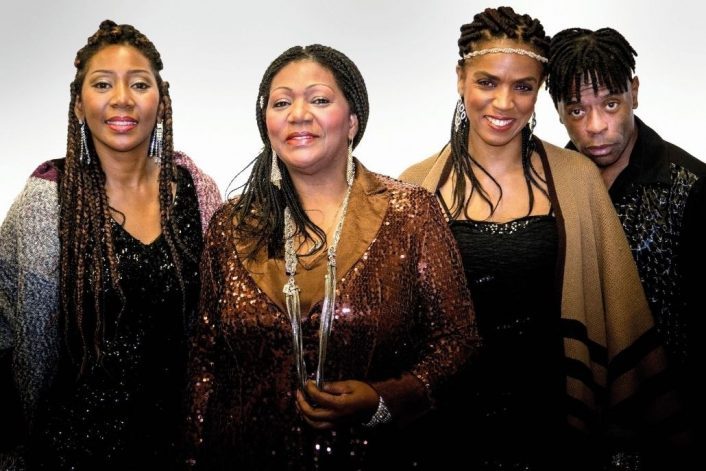
Thank you for your interest in Boney M.
We will be delighted to perform for you.
You got email, check your inbox !!! spam folder too !!!
Looking forward to hearing from you soon
Maya +447869422699
“Ma Baker” is a 1977 disco hit by Boney M., inspired by the notorious American outlaw legend of Kate “Ma” Barker. Produced by Frank Farian, the song combines a dramatic gangster story, spoken dialogue, driving disco rhythms and an instantly recognisable chorus.
Released as a single from Boney M.’s second studio album, Love for Sale, “Ma Baker” became a major international success. It reached No. 1 in West Germany and No. 2 on the UK Singles Chart.
Featuring vocal contributions from Liz Mitchell, Marcia Barrett and Frank Farian, the recording is one of the group’s best-known examples of storytelling through disco music.
| Detail | Information |
|---|---|
| Song | Ma Baker |
| Artist | Boney M. |
| Release year | 1977 |
| Album | Love for Sale |
| Songwriters | Frank Farian, Fred Jay, George Reyam |
| Producer | Frank Farian |
| Studio vocals | Liz Mitchell, Marcia Barrett, Frank Farian |
| Genre | Disco, Eurodisco |
| Original single B-side | Still I’m Sad |
| UK Singles Chart | No. 2 |
| German Singles Chart | No. 1 |
| Historical inspiration | Kate “Ma” Barker and the Barker–Karpis Gang |
“Ma Baker” followed Boney M.’s early international hits “Daddy Cool” and “Sunny”, continuing the group’s rapid rise during the late 1970s.
“Ma Baker” tells a fictionalised story about a ruthless female gangster who leads her sons into a life of crime.
The character is portrayed as a feared criminal who teaches her children to use weapons and participates in violent robberies.
As the story develops, the family leaves a trail of criminal activity across the United States before eventually facing a deadly confrontation with the police.
The song presents this narrative through short verses, a repetitive chorus and dramatic spoken passages resembling dialogue from a gangster film.
Despite its dark subject, the recording has an energetic, dance-oriented musical arrangement. This unusual contrast between crime storytelling and disco music gives “Ma Baker” much of its distinctive character.
Yes, the character was inspired by a real person, but the song is not a historically accurate account of her life.
Kate “Ma” Barker was the mother of several men associated with criminal activity in the United States during the 1930s.
Her name became connected with the Barker–Karpis Gang, whose members were involved in serious crimes, including kidnappings and robberies.
Over time, popular accounts portrayed Ma Barker as a powerful criminal mastermind who controlled her sons and directed their activities.
Boney M.’s song draws on this sensationalised image rather than offering a documentary account of the events.
The difference between the historical woman and the fictional character is essential to understanding the lyrics.
Kate Barker, commonly known as Ma Barker, became associated with the criminal activities of her sons and their associates during America’s Great Depression.
The Barker–Karpis Gang was particularly notorious during the early 1930s.
Among its central figures were Alvin Karpis and the Barker brothers, including Fred and Arthur “Doc” Barker.
Although popular stories frequently presented Kate Barker as the leader of the gang, her precise role in planning or directing its crimes remains disputed.
The FBI’s historical account identifies Karpis and the Barker brothers as leading figures and describes Kate Barker as someone known to assist her criminal sons.
This distinction is important because the legendary version of Ma Barker became much more dramatic than the documented historical record.
On 16 January 1935, Kate Barker and her son Fred died during a gun battle with federal agents at a house near Lake Weir, Florida.
According to the FBI’s historical account, agents surrounded the property and attempted to secure a surrender before the confrontation began.
The gun battle lasted for several hours, ending with the deaths of Kate and Fred Barker.
Unlike the fictional ending of Boney M.’s song, the historical confrontation did not involve Ma Barker and all four of her sons dying together.
The contrast between these events and the lyrics demonstrates how popular music can transform historical figures into larger-than-life characters.
“Ma Baker” is credited to Frank Farian, Fred Jay and George Reyam.
Farian created and produced Boney M., directing the studio recordings that established the group’s characteristic international disco sound.
The songwriting credits also identify Fred Jay and George Reyam, both associated with the creative work behind the recording.
The lyrics present a highly theatrical version of the Ma Barker legend, while the arrangement uses rhythmic repetition, contrasting vocals and spoken passages to create a memorable pop recording.
Some retrospective accounts of Boney M.’s early recordings connect the melody of “Ma Baker” with “Sidi Mansour”, a traditional song associated with Tunisia.
These accounts describe how the musical idea was adapted into a European disco arrangement during the development of the Boney M. recording.
However, the original release credits list Frank Farian, Fred Jay and George Reyam as the songwriters.
The reported connection with “Sidi Mansour” is therefore best distinguished from the officially documented songwriting credits, rather than presented as a fully established account of the composition’s legal or musical origins.
Liz Mitchell and Marcia Barrett were the principal female studio vocalists associated with Boney M.’s classic recordings.
Both are credited among the vocal contributors to “Ma Baker”.
Their performances help create the characteristic vocal texture of the song, combining repeated melodic phrases with energetic responses to the rhythmic arrangement.
Liz Mitchell joined Boney M. in 1976 and became one of the defining voices of the group’s international success.
Marcia Barrett was equally important to the group’s recorded sound, contributing significant vocal performances throughout Boney M.’s classic period.
“Ma Baker” is an example of the collaborative vocal production that helped make the group’s recordings distinctive.
Frank Farian also contributed vocals to Boney M.’s original recordings, including “Ma Baker”.
His studio work combined male and female vocal parts with carefully arranged instrumental backing.
The group’s classic performing line-up consisted of Liz Mitchell, Marcia Barrett, Maizie Williams and Bobby Farrell.
The distinction between the studio vocals and the four-member stage presentation is an important part of Boney M.’s history.
The spoken sections of “Ma Baker”, including its dramatic opening and mock news announcement, add another layer to the recording’s theatrical presentation.
“Ma Baker” combines a strong disco beat with a repetitive vocal refrain that makes the recording immediately recognisable.
The bassline, percussion and short melodic phrases create a driving rhythm, while the recurring chorus provides a simple musical hook.
Rather than relying on a conventional romantic theme, the recording builds its musical identity around the name of a fictional gangster character.
One of the song’s most distinctive features is its use of spoken dialogue.
The recording begins with a dramatic command and later introduces a fictional law-enforcement announcement.
These elements imitate the style of crime films and radio reports, adding theatrical tension to an otherwise upbeat disco arrangement.
The contrast between serious-sounding dialogue and energetic dance music makes “Ma Baker” unusual within the group’s repertoire.
This combination of storytelling, rhythm and vocal production helped establish the song as one of Boney M.’s recognisable 1970s recordings.
“Ma Baker” appears as the opening track on Love for Sale, Boney M.’s second studio album, released in 1977.
The album followed the group’s debut, Take the Heat off Me, and continued its development as an internationally successful disco act.
Other recordings on Love for Sale include “Belfast”, “Have You Ever Seen the Rain”, “A Woman Can Change a Man” and the title track.
The album brought together dance-oriented songs, dramatic narratives and reinterpretations of established compositions.
Love for Sale reached No. 13 on the UK Official Albums Chart.
According to the Official Charts Company, the album spent a total of ten weeks on the British chart.
The album helped consolidate the group’s popularity ahead of its next major release, Nightflight to Venus in 1978.
Its two best-known singles, “Ma Baker” and “Belfast”, remain important recordings from Boney M.’s early international career.
“Ma Baker” reached No. 1 on the German Singles Chart in 1977.
It became Boney M.’s third consecutive German chart-topping single, following “Daddy Cool” and “Sunny”.
This success confirmed that the group’s popularity extended beyond a single breakthrough recording.
The song helped maintain Boney M.’s position as one of the leading European disco acts of the period.
“Ma Baker” also became a major British hit.
According to the Official Charts Company, the single entered the UK chart on 25 June 1977.
It reached No. 2 on 30 July 1977 and spent 13 weeks on the chart, including seven weeks in the Top 10.
The recording continued Boney M.’s early success in Britain and helped establish the group as a familiar name to British pop audiences.
Together with “Daddy Cool” and “Sunny”, “Ma Baker” formed an important part of Boney M.’s first wave of international hits.
Boney M.’s television appearances played an important role in presenting the group’s music and visual identity to international audiences.
A notable performance of “Ma Baker” appeared on the German television programme Musikladen in 1977.
Watch Boney M. — Ma Baker (Musikladen 1977) on the official Boney M. YouTube channel.
The performance features the group’s classic stage presentation, distinctive costumes and energetic choreography.
It provides a visual example of how Boney M. combined disco music with theatrical performance during the group’s early international success.
You can also listen to the original studio recording using the Spotify player on this page.
“Ma Baker” occupies a distinctive place in Boney M.’s catalogue.
The recording combines musical entertainment with a fictional crime story, demonstrating the group’s ability to explore themes beyond conventional romance and dance music.
Its success in Germany and the United Kingdom strengthened Boney M.’s international reputation in 1977.
The song also illustrates the group’s characteristic studio sound, shaped by Frank Farian and the vocal contributions of Liz Mitchell and Marcia Barrett.
Alongside “Daddy Cool”, “Sunny” and “Belfast”, it represents an important chapter in the development of Boney M. before the worldwide success of Nightflight to Venus.
“Ma Baker” was released in 1977 and appeared on Boney M.’s second studio album, Love for Sale.
Popular stories portrayed her as a criminal mastermind, but her precise role remains disputed. The FBI’s historical account identifies Alvin Karpis and the Barker brothers as central figures in the gang.
Yes. Liz Mitchell is among the credited studio vocalists on the Boney M. recording, alongside Marcia Barrett and Frank Farian.
“Ma Baker” is the opening track on Love for Sale, Boney M.’s second studio album, released in 1977.

Boney M Liz Mitchell contact:
Official website: boneym-lizmitchell.com
Email: info@boneym-lizmitchell.com
Phone: +447869422699
WhatsApp: +447869422699
Official Liz Mitchell Instagram: @boneym_liz_mitchell
The group’s manager is Thomas P.
Boney M Liz Mitchell’s booking agent and tour manager is Maya F.
Hiring Boney M Liz Mitchell for Corporate Events, Private Parties, Festivals and Weddings is easy with worldwide Booking Agent Maya of Boney M with Liz Mitchell.
