

Request Sent Successfully!
Thank you for your interest in Boney M.
We will be delighted to perform for you.
You got email, check your inbox !!! spam folder too !!!
Looking forward to hearing from you soon
Maya +447869422699
“Belfast” is a 1977 song by Boney M., featuring the powerful lead vocals of Marcia Barrett. Released on the group’s second studio album, Love for Sale, the recording combines the energetic sound of European disco with lyrics reflecting the tensions, divisions and human suffering associated with Northern Ireland’s troubled history.
Produced by Frank Farian and credited to songwriters Drafi Deutscher, Jimmy Bilsbury and Joe Menke, “Belfast” became a major European hit. It reached No. 1 in West Germany and No. 8 on the UK Singles Chart.
Unlike many dance records of the 1970s, “Belfast” addresses a serious historical subject. Its contrast between an upbeat musical arrangement and socially conscious lyrics makes it one of the most distinctive recordings in Boney M.’s early catalogue.
| Detail | Information |
|---|---|
| Song | Belfast |
| Artist | Boney M. |
| Year | 1977 |
| Album | Love for Sale |
| Featured lead vocalist | Marcia Barrett |
| Songwriters | Drafi Deutscher, Jimmy Bilsbury, Joe Menke |
| Producer | Frank Farian |
| Genre | Eurodisco, disco-pop |
| UK Singles Chart | No. 8 |
| German Singles Chart | No. 1 |
The original recording appeared during Boney M.’s breakthrough years, following the success of “Daddy Cool”, “Sunny” and “Ma Baker”.
It also demonstrated that the group could combine its familiar rhythmic style with subjects extending beyond conventional dance and love songs.
The lyrics of “Belfast” refer to the social and political divisions affecting Northern Ireland during The Troubles, a period of conflict that began in the late 1960s and continued until the peace process associated with the 1998 Good Friday Agreement.
The conflict involved competing national identities, constitutional aspirations and deep divisions within society. Violence and political instability affected communities across Northern Ireland, including its capital, Belfast.
Against this historical background, the song focuses on the experiences of ordinary people rather than presenting a detailed political argument.
Themes of separation, distrust and people leaving their communities give the recording an emotional dimension beneath its dance-oriented sound.
At the centre of “Belfast” is a concern about division between communities and the consequences that hostility can have for families and future generations.
The repeated references to people leaving suggest displacement, uncertainty and a loss of confidence in society.
At the same time, the song emphasises belief in people and children, introducing a contrasting sense of hope.
These ideas can be understood as an appeal for greater understanding and a recognition of shared humanity.
Rather than explaining the political causes of the conflict, the lyrics concentrate on its human consequences.
One of the most striking features of “Belfast” is the contrast between its serious subject and its energetic musical arrangement.
The recording combines an insistent disco rhythm, a memorable chorus and expressive vocals with lyrics describing a divided society.
This contrast makes the message stand out. The music invites movement, while the words encourage listeners to consider the experience of people living through conflict.
It is one of the qualities that distinguishes “Belfast” from many other Boney M. songs released during the same period.
“Belfast” is credited to three songwriters: Drafi Deutscher, Jimmy Bilsbury and Joe Menke.
Their names appear in music catalogues and release information associated with the recording.
The Boney M. version was produced by Frank Farian, the German producer who created the group and directed much of its studio output.
Farian’s distinctive production approach brought together dance rhythms, memorable melodies and carefully arranged vocal performances.
On “Belfast”, that approach helped transform a song dealing with a serious subject into an internationally successful pop and disco recording.
Yes. The history of “Belfast” includes an earlier German-language recording by singer Gilla, who also worked with Frank Farian.
Gilla’s version appeared on her album Zieh mich aus before Boney M.’s international breakthrough with the song in 1977.
This earlier recording illustrates how songs and musical ideas circulated between different performers working within Farian’s production circle.
Boney M.’s interpretation brought “Belfast” to a considerably wider international audience.
Marcia Barrett is the featured lead vocalist on Boney M.’s “Belfast”.
Her performance is central to the character of the recording. The strength of her voice and the directness of her delivery suit a song dealing with conflict, uncertainty and the experiences of ordinary people.
Barrett was one of the principal vocalists associated with Boney M.’s original recordings and an essential member of the group’s classic performing line-up.
“Belfast” is a particularly important recording for appreciating her contribution to Boney M.’s musical identity.
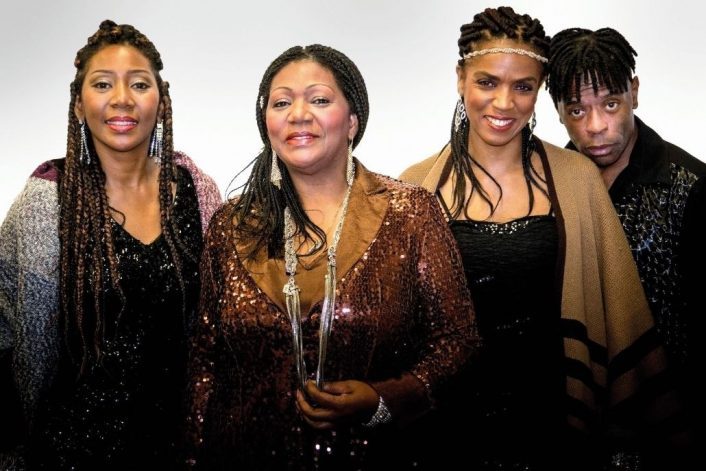
The classic Boney M. performing line-up consisted of Liz Mitchell, Marcia Barrett, Maizie Williams and Bobby Farrell.
Liz Mitchell became one of the group’s defining recorded voices, while Marcia Barrett also delivered important lead vocal performances.
The studio recordings were shaped by Frank Farian, who contributed vocals and produced the group’s distinctive sound.
MusicBrainz lists Barrett, Mitchell and Farian among the vocal contributors associated with “Belfast”, although the featured lead performance is particularly identified with Marcia Barrett.
The distinction between the individual vocal performances is an important part of understanding Boney M.’s recording history.
Together, the musicians and performers helped establish the group’s recognisable style during the second half of the 1970s.
“Belfast” appeared on Love for Sale, Boney M.’s second studio album, released in 1977.
The album followed the group’s successful debut, Take the Heat off Me, and continued the development of its distinctive European disco sound.
Alongside “Belfast”, Love for Sale included “Ma Baker”, another major hit from the same year.
The album also contained recordings such as “Have You Ever Seen the Rain”, “A Woman Can Change a Man” and the title track “Love for Sale”.
Together, these songs illustrate the variety of musical styles and subjects explored in Boney M.’s early career.
Love for Sale achieved substantial commercial success in several European markets.
The album reached No. 1 on the German Albums Chart and No. 13 on the UK Official Albums Chart.
Its success helped consolidate Boney M.’s position as one of the major European disco groups of the late 1970s.
The album also provided the foundation for the group’s next phase of international success, which included Nightflight to Venus in 1978.
“Belfast” reached No. 1 on the German Singles Chart in 1977.
It followed the German chart-topping success of “Daddy Cool”, “Sunny” and “Ma Baker”, continuing an extraordinary sequence of hit singles for Boney M.
The recording demonstrated the group’s ability to maintain its popularity while introducing a different lyrical theme.
“Belfast” also became a Top 10 hit in the United Kingdom.
According to the Official Charts Company, the single reached No. 8 on 17 December 1977.
It spent a total of 13 weeks on the UK Singles Chart, from October 1977 to January 1978.
This result strengthened Boney M.’s growing presence in the British music market following the success of “Daddy Cool”, “Sunny” and “Ma Baker”.
Several musical and lyrical characteristics distinguish “Belfast” from the group’s other recordings.
Many of Boney M.’s best-known songs use fictional characters, historical stories, romance or celebratory themes.
“Belfast” takes a different approach by referring to an actual period of political and social conflict.
The subject gives the recording a more reflective dimension while retaining the group’s dance-oriented musical style.
Marcia Barrett’s lead performance gives the song its distinctive vocal character.
Her delivery helps communicate the urgency of the lyrics while remaining closely connected to the strong rhythm and recurring melodic phrases.
The repeated title, driving beat and layered vocal passages make “Belfast” immediately recognisable.
These elements helped the song work both as a commercial disco single and as a recording with a more serious lyrical theme.
“Belfast” was part of Boney M.’s television repertoire during the group’s early international success.
One notable performance took place on the German television programme ZDF Silvester-Tanzparty on 31 December 1977.
The recording offers a look at the original group’s stage presentation and the performance style associated with Boney M.’s rise to international fame.
You can also listen to the original studio recording using the Spotify player on this page.
“Belfast” occupies a distinctive place in Boney M.’s catalogue because of its combination of commercial success, expressive vocals and historically connected lyrics.
The song shows how the group could move beyond familiar disco themes while retaining its characteristic sound.
It is also one of the notable examples of Marcia Barrett’s contribution as a lead vocalist within Boney M.
The recording remains a document of the group’s successful 1977 period and demonstrates the range of material released under Frank Farian’s production.
For listeners exploring Boney M. beyond the group’s most frequently played hits, “Belfast” offers a different perspective on its musical history.
“Belfast” was released as a Boney M. single in 1977. It also appeared on the group’s second studio album, Love for Sale, from the same year.
Marcia Barrett is the featured lead vocalist on Boney M.’s “Belfast”. She was a member of the group’s classic line-up alongside Liz Mitchell, Maizie Williams and Bobby Farrell.
“Belfast” addresses themes associated with Northern Ireland’s historical conflict, including division, fear and people leaving their communities. Its lyrics can be interpreted as expressing concern about the human consequences of conflict rather than supporting a specific political party or movement.
The song is credited to Drafi Deutscher, Jimmy Bilsbury and Joe Menke. The Boney M. recording was produced by Frank Farian.
“Belfast” appears on Love for Sale, the group’s second studio album, released in 1977.
Yes. “Belfast” reached No. 1 in Germany. In the United Kingdom, it peaked at No. 8 and spent 13 weeks on the Singles Chart.
An earlier German-language version was recorded by Gilla before Boney M.’s internationally successful 1977 version.
“Belfast” is part of the early recording history of one of the most successful disco groups of the 1970s.
To explore other songs from this period, read about Ma Baker, another major Boney M. hit released in 1977.
Discover the group’s broader catalogue in our Boney M. songs collection or explore the history of Boney M. and its classic members.
For information about the contemporary concert project featuring original Boney M. vocalist Liz Mitchell, visit the Boney M. feat. Liz Mitchell booking page.

Boney M Liz Mitchell contact:
Official website: boneym-lizmitchell.com
Email: info@boneym-lizmitchell.com
Phone: +447869422699
WhatsApp: +447869422699
Official Liz Mitchell Instagram: @boneym_liz_mitchell
The group’s manager is Thomas P.
Boney M Liz Mitchell’s booking agent and tour manager is Maya F.
Hiring Boney M Liz Mitchell for Corporate Events, Private Parties, Festivals and Weddings is easy with worldwide Booking Agent Maya of Boney M with Liz Mitchell.
