

Request Sent Successfully!
Thank you for your interest in Boney M.
We will be delighted to perform for you.
You got email, check your inbox !!! spam folder too !!!
Looking forward to hearing from you soon
Maya +447869422699
“Sunny” is a 1976 disco recording by Boney M., featuring the distinctive vocals of Liz Mitchell and produced by Frank Farian. Originally written and made famous by American singer-songwriter Bobby Hebb in the 1960s, the song became an international hit again when Boney M. introduced its energetic Eurodisco interpretation.
Released on the group’s debut album, Take the Heat off Me, “Sunny” helped build on the success of “Daddy Cool” and established Boney M. as one of the rising stars of European disco.
The recording reached No. 1 in Germany and No. 3 on the UK Singles Chart in 1977. Its uplifting message, memorable melody and dance-oriented arrangement made it an important part of Boney M.’s classic repertoire.
| Detail | Information |
|---|---|
| Song | Sunny |
| Artist | Boney M. |
| Boney M. release year | 1976 |
| Album | Take the Heat off Me |
| Original songwriter | Bobby Hebb |
| Producer | Frank Farian |
| Studio vocalists | Liz Mitchell, Marcia Barrett, Frank Farian |
| Genre | Disco, Eurodisco |
| Original famous hit | Bobby Hebb — Sunny (1966) |
| Original Boney M. single B-side | New York City |
| German Singles Chart | No. 1 (1977) |
| UK Singles Chart | No. 3 (1977) |
| Weeks on UK chart | 10 |
“Sunny” was an established song before Boney M. recorded it. Frank Farian’s production gave the composition a new disco identity while retaining the hopeful message of Bobby Hebb’s original.
The central theme of “Sunny” is the emotional transformation from sadness to happiness through love and human connection.
The narrator describes moving beyond a difficult period and expresses gratitude to someone whose presence has brought comfort, confidence and renewed optimism.
The name “Sunny” can be understood both as a person being addressed and as a symbol of warmth, light and positive change.
Instead of presenting an elaborate storyline, the lyrics focus on the difference between emotional darkness and the happiness that follows.
This simple but powerful contrast has helped the song connect with audiences across different musical styles and generations.
The lyrics express appreciation for someone who has helped the narrator overcome pain and uncertainty.
Images of rain, sunshine and changing emotional circumstances reinforce the central idea of finding hope after difficult experiences.
The song can be interpreted as a declaration of romantic love, but its message is also broader. It celebrates gratitude, emotional support and the possibility of a brighter future.
Boney M.’s upbeat arrangement strengthens this optimistic interpretation, transforming a soulful expression of appreciation into an energetic dance recording.
The song’s emotional simplicity is one of its greatest qualities: listeners can connect with its message without needing to know the personal circumstances that inspired its creation.
“Sunny” was written by American singer-songwriter Bobby Hebb, whose recording became an international hit in 1966.
Hebb was born in Nashville, Tennessee, and developed a musical career influenced by soul, rhythm and blues, jazz and country music.
The song is frequently connected with a difficult period in his life following the death of his older brother in 1963.
Accounts of its creation describe Hebb’s search for hope during a time of personal grief. Rather than expressing despair, “Sunny” became a celebration of optimism and emotional renewal.
Hebb’s recording reached No. 2 on the US Billboard Hot 100 and No. 12 on the UK Singles Chart.
His success introduced the composition to an international audience and helped establish “Sunny” as a song that other artists would reinterpret in different styles.
Although Bobby Hebb wrote the song and made it internationally famous in 1966, an earlier recording by Japanese singer Mieko Hirota appeared in 1965.
Her interpretation preceded Hebb’s best-known recording.
This distinction is an interesting part of the song’s history: Hebb was its composer and original hit performer, but his famous 1966 single was not necessarily its earliest commercial recording.
Over the following decades, “Sunny” became a widely interpreted popular song, performed by artists working in soul, jazz, pop and other genres.
Boney M.’s 1976 version became one of the best-known disco interpretations.
By 1976, German producer Frank Farian was developing Boney M. into an internationally recognised recording and performing group.
Following the breakthrough success of “Daddy Cool”, Boney M.’s version of “Sunny” continued the group’s rise across European music markets.
Farian’s production transformed the established composition into a polished disco recording.
The arrangement emphasises a strong dance rhythm, rhythmic bass, instrumental accents and carefully layered vocal harmonies.
While Bobby Hebb’s famous version belongs to the American soul tradition, Boney M.’s interpretation places the familiar melody within the sound of European disco.
This change of musical setting allowed the composition to reach a new audience without losing its original message of hope and gratitude.
Liz Mitchell was one of the principal vocalists of Boney M.’s classic recording era.
Her expressive voice became a defining feature of the group’s international sound, and “Sunny” is among the recordings associated with her early contribution to Boney M.
Music catalogues credit Liz Mitchell, Marcia Barrett and Frank Farian with lead and backing vocal contributions to the original Boney M. recording.
The layered vocal arrangement is an essential part of the track’s musical identity, giving the familiar melody a distinctive disco character.
Mitchell’s contribution also connects “Sunny” with the wider Boney M. repertoire, in which she became one of the group’s most recognisable recorded voices.
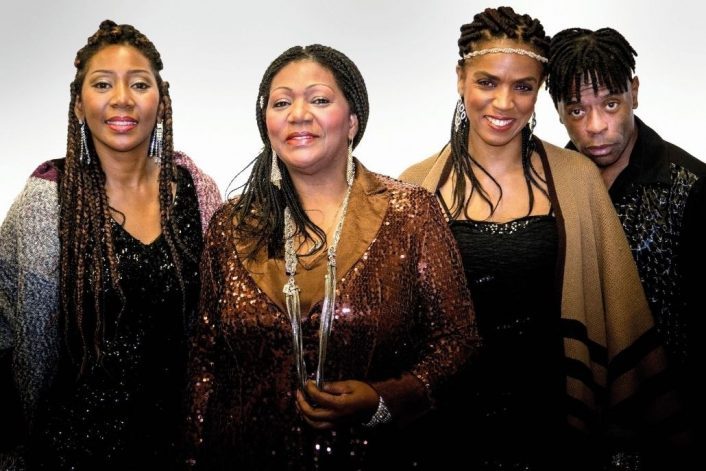
The classic performing line-up consisted of Liz Mitchell, Marcia Barrett, Maizie Williams and Bobby Farrell, while Frank Farian directed the studio productions and contributed vocals.
One of the most distinctive features of Boney M.’s version is its transformation of a soul classic into a dance-oriented recording.
The original melody remains recognisable, but the stronger rhythm and polished production create a different listening experience.
The repeating instrumental patterns maintain momentum, while the arrangement gives the vocals room to express the song’s uplifting message.
The combination of melodic lead passages and layered backing vocals gives the recording a full, rhythmic sound.
The recurring title acts as a memorable musical hook, while the arrangement builds an atmosphere of celebration and optimism.
Rather than dramatically changing the original composition, Boney M. made it fit the group’s developing musical identity.
That balance between a familiar song and a new production style helped make “Sunny” successful with disco audiences.
“Sunny” appears on Take the Heat off Me, Boney M.’s debut studio album, released in 1976.
Produced by Frank Farian, the album introduced the musical direction that would define the group’s early international success.
Alongside “Sunny”, the album featured “Daddy Cool”, “Baby Do You Wanna Bump”, “No Woman No Cry”, “Fever” and the title track “Take the Heat off Me”.
The combination of original productions and new interpretations of existing songs established an approach that became an important part of Boney M.’s early recording career.
“Sunny” followed “Daddy Cool” as another major hit from the album, helping the group maintain its popularity across Europe.
“Sunny” was also released as a single in 1976.
One well-documented edition featured “New York City” on the B-side, issued through Hansa International.
This release illustrates how Boney M. combined familiar international compositions with recordings produced within Frank Farian’s studio circle.
Different countries received their own editions and record-label configurations, but the success of “Sunny” helped establish the group’s international presence.
Boney M.’s “Sunny” became a major commercial success in West Germany.
The single first entered the German chart in December 1976 and reached No. 1 in January 1977.
Its success followed “Daddy Cool”, giving Boney M. another chart-topping single during the group’s breakthrough period.
“Sunny” also became one of Boney M.’s early British hits.
According to the Official Charts Company, the single entered the UK Singles Chart on 12 March 1977.
It reached No. 3 on 16 April 1977 and spent ten weeks on the chart, including five weeks in the Top 10.
This result was particularly significant because it followed the success of “Daddy Cool” and preceded another major British hit, “Ma Baker”.
Boney M.’s recording also achieved a higher UK chart peak than Bobby Hebb’s own 1966 version, which had reached No. 12.
The two releases demonstrate how the same composition could achieve success with different audiences more than a decade apart.
Boney M.’s television appearances helped introduce the group’s music and distinctive stage presentation to European audiences.
An early performance of “Sunny” appeared on the German music programme Musikladen in 1976.
The performance captures the group’s classic visual identity, energetic choreography and the presentation that helped Boney M. become internationally recognisable.
You can also listen to the studio recording using the Spotify player on this page.
“Sunny” occupies an important place in Boney M.’s early recording history.
It connects Bobby Hebb’s influential songwriting with the disco sound developed by Frank Farian and the vocal performances associated with the group’s classic era.
The recording demonstrates how Boney M. could reinterpret an established song for a new musical generation while preserving its central emotional message.
Its international chart success helped consolidate the group’s growing reputation after the breakthrough of “Daddy Cool”.
For listeners discovering Boney M., “Sunny” remains an accessible example of the group’s characteristic combination of melodic vocals, polished production and dance-oriented rhythms.
It is also a reminder of the enduring appeal of Bobby Hebb’s composition, whose message of gratitude and hope continues to transcend individual musical styles.
Boney M. released its version of “Sunny” in 1976. The recording appeared on the group’s debut album, Take the Heat off Me, and became a major chart hit in 1977.
“Sunny” was written by American singer-songwriter Bobby Hebb. His famous recording was released in 1966, although an earlier version by Japanese singer Mieko Hirota appeared in 1965.
Liz Mitchell is one of the credited vocalists on Boney M.’s version of “Sunny”. Music catalogues also credit Marcia Barrett and Frank Farian with vocal contributions.
The song expresses gratitude, love and the movement from sadness toward hope. “Sunny” can represent a supportive person or symbolise the arrival of happiness after difficult experiences.
No. “Sunny” is a cover of a composition written by Bobby Hebb. Boney M. recorded its own disco interpretation in 1976.
Yes. Boney M.’s “Sunny” reached No. 1 in Germany in 1977. In the United Kingdom, it peaked at No. 3.
“Sunny” appears on Take the Heat off Me, Boney M.’s debut studio album from 1976.
Bobby Hebb’s song existed long before Boney M.’s breakthrough. However, Boney M.’s version of “Sunny” was released as a single after “Daddy Cool” became a major hit in 1976.

Boney M Liz Mitchell contact:
Official website: boneym-lizmitchell.com
Email: info@boneym-lizmitchell.com
Phone: +447869422699
WhatsApp: +447869422699
Official Liz Mitchell Instagram: @boneym_liz_mitchell
The group’s manager is Thomas P.
Boney M Liz Mitchell’s booking agent and tour manager is Maya F.
Hiring Boney M Liz Mitchell for Corporate Events, Private Parties, Festivals and Weddings is easy with worldwide Booking Agent Maya of Boney M with Liz Mitchell.
